-
The Latest Buzz
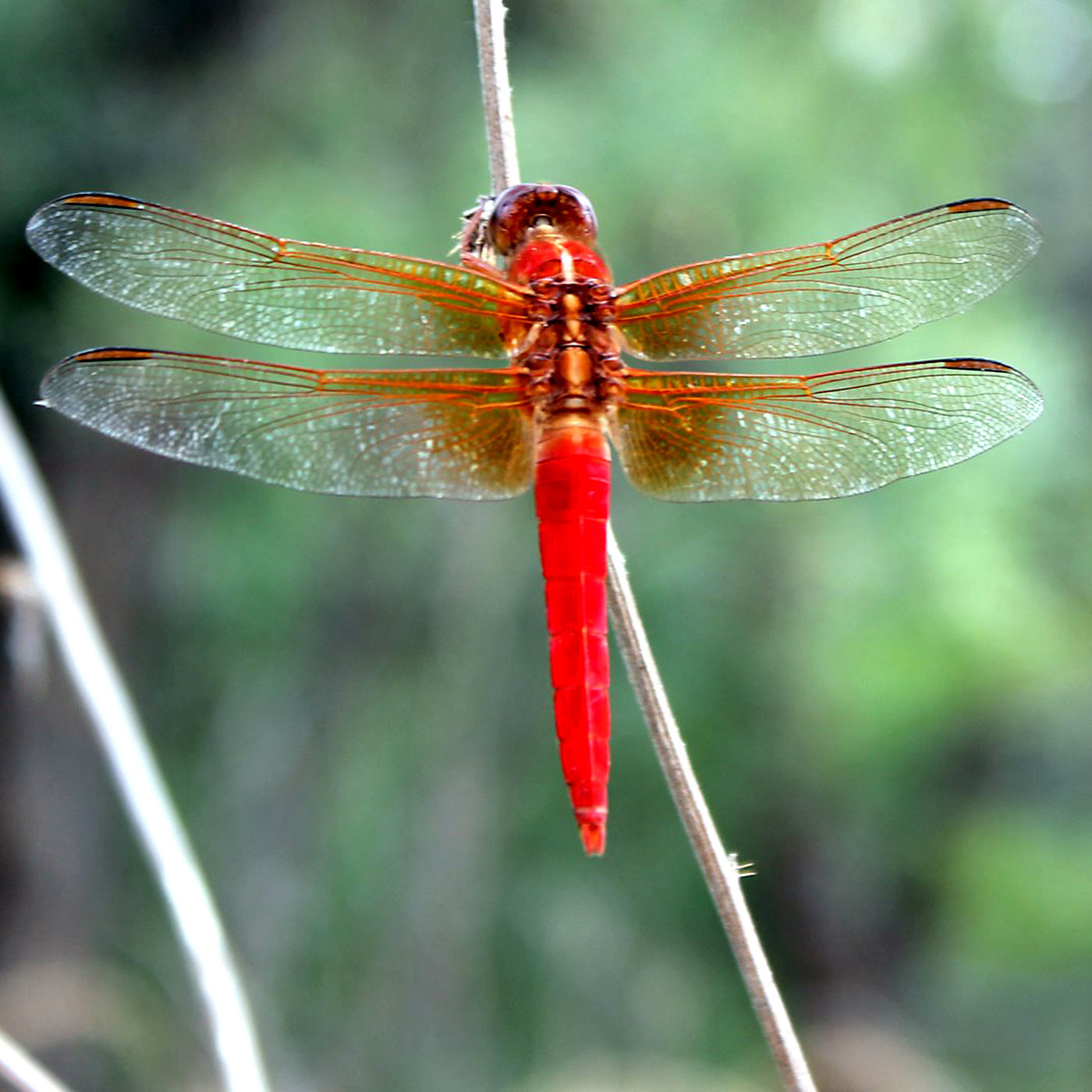
Is your windshield accumulating less bug splatter? Insects, the most numerous animals on Earth, are becoming scarcer, and that’s not good news. They’re essential, and not just for their service as pollinators. We ask what’s causing the decrease in insect populations, and how can it be reversed. Also, the story of how California’s early citrus…
-
Life Back Then
Time keeps on ticking, ticking … and as it does, evolution operates to produce remarkable changes in species. Wings may appear, tails disappear. Sea creatures drag themselves onto the shore and become landlubbers. But it’s not easy to grasp the expansive time scales involved in these transformative feats. Travel through… Listen ⇢
-
Catch a Wave
Let there be light. Otherwise we couldn’t watch a sunset or YouTube. Yet what your eye sees is but a narrow band in the electromagnetic spectrum. Shorten those light waves and you get invisible gamma radiation. Lengthen them and tune into a radio broadcast. Discover what’s revealed about our universe… Listen ⇢

-
Seth’s Cabinet of Wonders
It’s always a surprise to sort through Seth’s cabinet of wonders – who knows what we’ll find! In this cramped cupboard, tucked between shelves of worm gears and used clarinet reeds, we discover a forgotten U.S. sea floor laboratory … copies of the new Cosmos TV series … evidence of… Listen ⇢

-
Skeptic Check: Prog-Not-Stication
The future is no mystery … according to psychics who say they have special access to tomorrow’s events. For example, adherents to the Mayan doomsday prophecy warn that when 2012 ends, so will the world. Discover what’s behind claims of prognostication, and why – if it really works – no… Listen ⇢

-
Rife with Life
“Follow the water” is the mantra of those who search for life beyond Earth. Where there’s water, there may be life. Join us on a tour of watery solar system bodies that hold promise for biology. Dig beneath the icy shell of Jupiter’s moon Europa, and plunge into the jets… Listen ⇢
-
Getting a Spacelift
I need my space… but oh, how to get there? Whether it’s a mission to Mars or an ascent to an asteroid, we explore the hows of human spaceflight. Also, the whys, as in, why send humans to the final frontier if robots are cheaper? Neil deGrasse Tyson weighs in.… Listen ⇢
-
Material Whirl
What’s the world made of? Here’s a concrete answer: a lot of it is built from a dense, knee-scraping substance that is the most common man-made material. But while concrete may be here to stay, plenty of new materials will come our way in the 21st century. Discover the better,… Listen ⇢

-
Skeptic Check: Energy Vortex
“I feel your vibe!” Well, that describes a number of fabled locales that claim to pulse with mysterious energy – perhaps prompting books to fly across the room or airplanes to vanish into thin air. But what’s the science behind it? We examine spots marked with an X, for “extraordinary”… Listen ⇢

-
Wired for Thought
A cup of coffee can leave you wired for the day. But a chip in your brain could wire you to a machine forever. Imagine manipulating a mouse without moving a muscle, and doing a Google search with your mind. Welcome to the future of the brain-machine interface. Don your… Listen ⇢